Understanding Spectator Mode as a Learning Opportunity
wpthemevault.com – Mobile Legends: Bang Bang offers more than direct participation in matches. Spectator features can provide players with an opportunity to observe how other people approach battles, manage resources, and respond to changing situations. Watching a match from another player’s perspective creates a different learning experience because attention can shift away from personal survival and toward the decisions made across the battlefield. Instead of concentrating on controlling a hero, viewers can study how players recognize opportunities, respond to threats, and coordinate with teammates. This perspective is particularly useful for understanding the relationship between individual actions and overall team performance. A player might notice that an experienced competitor avoids a seemingly attractive fight because the surrounding conditions are unfavorable. Another may observe how a team prepares for an objective long before the actual engagement begins. These decisions can be difficult to recognize while playing because personal attention is divided between movement, abilities, positioning, and communication. Spectating removes much of that immediate pressure and allows viewers to examine situations more carefully. However, watching skilled players should not be treated as a guarantee of improvement. The value comes from understanding why a decision works rather than simply memorizing what someone does. A particular movement may be effective because of the hero’s abilities, the enemy composition, or the timing of the match. Copying the same action without understanding its context can produce poor results. Players should therefore observe the conditions surrounding important decisions. They can consider what information was available, which alternatives existed, and what consequences followed. Over time, this habit can improve their ability to recognize meaningful patterns during their own matches. Spectator mode becomes much more valuable when it is used as a tool for studying decision-making rather than simply watching entertaining gameplay.
Studying Team Coordination Through Different Player Perspectives
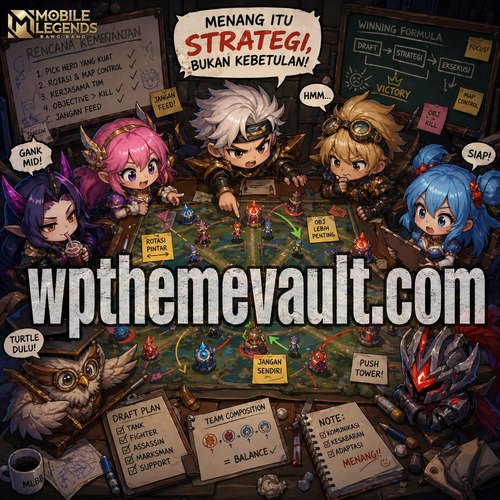
Team coordination is one of the most interesting aspects of Mobile Legends because several players must work together despite controlling different heroes and having different responsibilities. Spectator mode can reveal how those responsibilities interact throughout a match. A viewer may observe how a tank creates space for damage dealers, how a support protects vulnerable teammates, or how a jungler changes position when an important objective becomes available. These actions are connected, even when they occur in different areas of the map. Watching from a broader perspective can help players understand how individual roles contribute to a shared plan. For example, a team may appear to be preparing for a fight near one lane while another player applies pressure elsewhere. That movement may force opponents to divide their attention and create a more favorable situation for the rest of the team. Without spectating, such decisions can be difficult to appreciate because each participant sees only part of the developing situation. Viewers should also pay attention to communication patterns when they are available. Coordinated teams often use signals and timely responses to establish shared intentions. Their success does not necessarily depend on constant communication, but rather on providing useful information when it matters. Another important detail is how players react when coordination breaks down. A strong team may decide to retreat after an ally is caught out of position instead of allowing the entire group to enter an unfavorable fight. Observing these moments demonstrates that teamwork includes knowing when not to engage. Players can also compare how different teams approach similar situations. One team may prefer patient defensive positioning, while another relies on aggressive movement and quick opportunities. Neither approach is universally correct because effectiveness depends on hero composition, available resources, and the current match situation. Studying these differences can help viewers develop a more flexible understanding of teamwork rather than believing that one strategy should always be followed.
Recognizing the Importance of Timing and Map Awareness
Map awareness is difficult to develop when players concentrate exclusively on nearby enemies and immediate combat. Spectator mode can make broader movement patterns easier to recognize because viewers may have access to information that is not always visible from an individual player’s perspective. This creates an opportunity to study how experienced players respond to disappearing opponents, approaching waves, and changes in objective availability. A viewer can observe whether a player moves toward a dangerous area without sufficient information or waits until teammates are positioned to provide support. These details demonstrate that good timing is often connected to information rather than mechanical speed. An apparently simple rotation may involve several earlier decisions, such as clearing a wave, checking an enemy position, or waiting for an ability to become available. Viewers should examine what happens before and after important movements. If a player successfully reaches a fight, they can consider which conditions made the rotation possible. If another player arrives too late, they can look for the earlier decision that caused the delay. Objective preparation is another useful subject. Strong teams often begin adjusting their positions before an objective becomes the center of attention. They may clear nearby waves, occupy useful areas, or prevent opponents from moving freely. Observing these preparations helps viewers understand that important battles are frequently influenced by actions taken well before the first ability is used. Spectator mode also makes it easier to notice when teams abandon an objective because the situation has changed. Continuing with an original plan despite unfavorable conditions can create unnecessary losses. By watching how players adjust their timing, viewers can develop a better sense of how map awareness supports practical decisions. The goal is not to predict every movement perfectly, but to recognize the information that makes a decision reasonable.
Learning From Professional and High-Level Matches Without Blindly Copying Them
Watching professional or high-level Mobile Legends matches can introduce players to advanced approaches that may not appear frequently in ordinary games. These matches often demonstrate coordinated movement, carefully planned hero combinations, and disciplined responses to changing circumstances. However, viewers should remember that professional environments are different from ordinary ranked matches. Competitive teams may have extensive practice, established communication systems, and a deeper understanding of their teammates’ habits. Their decisions are supported by preparation that individual players may not have. As a result, copying an entire professional strategy without considering personal circumstances can be ineffective. A better method is to identify the underlying principle behind a successful action. For instance, instead of copying a specific rotation exactly, viewers can study why the team moved together and what advantage that movement created. The lesson might involve protecting a teammate, controlling an area, or forcing opponents to respond to pressure. These principles can often be adapted to different levels of play. Hero selection is another area where context matters. A professional player may choose a hero because it fits a carefully prepared team composition, not because that hero is automatically the strongest option in every match. Viewers should examine how the selected hero contributes to the team’s overall plan. They can also observe how the player adjusts when the original plan becomes difficult to execute. Another useful habit is comparing different matches instead of treating one performance as a universal example. If several teams use different approaches successfully, the viewer can begin identifying the conditions that influence those choices. This encourages flexible thinking and prevents the assumption that every high-level action should be copied directly. Professional matches are most valuable when they provide ideas that can be understood, evaluated, and adapted to realistic gameplay situations.
Using Specific Observation Goals Instead of Watching Without Direction
Spectating becomes more productive when players enter a match with a clear observation goal. Watching every movement without a particular focus can make it difficult to remember useful information. A player who wants to improve positioning, for example, can concentrate on how a damage dealer maintains distance from enemy threats. Someone interested in team coordination can observe how players move before important engagements. Another viewer may focus on how a particular role handles difficult situations when the team is behind. These goals make the viewing experience more organized without turning it into a complicated study session. It is generally better to examine one subject carefully than to attempt to understand every aspect of a match simultaneously. Players can begin by selecting a hero or role that they regularly use. They can then observe how experienced players manage that role during different stages of the match. Important questions include where the player spends time, when they leave their lane, how they respond to pressure, and which responsibilities they prioritize during team fights. Viewers should also pay attention to unsuccessful decisions. A player may make a mistake even in a high-level match, and examining that moment can provide valuable information. The objective is to understand the situation rather than judge the player. Perhaps the player lacked information, underestimated an enemy ability, or entered a fight without enough support. Recognizing these factors can help viewers avoid similar mistakes. Taking brief personal notes may also improve retention, especially when a viewer discovers a useful idea that they want to test later. Those notes do not need to contain detailed match descriptions. A short reminder about positioning, timing, or decision-making can be enough. By choosing focused observation goals, players can make spectator sessions more meaningful and turn passive viewing into an active learning process.
Applying Observed Lessons During Your Own Matches
The final stage of learning through spectator mode is applying useful observations in actual gameplay. Information has limited value when it remains an interesting idea that is never tested. However, players should introduce new concepts gradually rather than attempting to change their entire playstyle after watching one match. A sensible approach is to choose a single lesson and identify a situation in which it may be useful. If the observation involves safer positioning, the player can focus on maintaining an appropriate distance during their next few team fights. If it concerns rotation timing, they can pay closer attention to lane conditions before moving toward another area. The purpose is to test whether the principle works in their own environment. Players should recognize that their matches may involve different heroes, teammates, and levels of coordination. A decision that was effective in a professional match may need adjustment when communication is limited. For example, an aggressive movement that succeeds with a coordinated team could become dangerous when teammates are unable to follow. Adaptation is therefore more important than exact imitation. Players should also evaluate the outcome of their experiments without relying exclusively on victory or defeat. A match can be lost even when a particular decision was correct, while a winning match may still contain habits that need improvement. Reviewing the reasoning behind an action provides a clearer understanding of progress. If a new approach creates better positioning but does not immediately produce more eliminations, it may still represent a useful improvement. On the other hand, if an idea repeatedly causes problems, players should reconsider the conditions in which they are applying it. Learning is an ongoing process that requires observation, experimentation, and adjustment. Spectator mode supplies examples, but personal experience determines how those examples can be used effectively. When players combine careful viewing with deliberate practice, they can gradually develop a more complete understanding of Mobile Legends.
Conclusion Mastering Mobile Legends Spectator Mode: How to Learn Advanced Strategies by Watching Other Players
Spectator mode can be a valuable learning resource for Mobile Legends players who want to understand the game beyond their own immediate experience. By watching other people play, viewers can examine decision-making, team coordination, map awareness, and timing without having to manage the mechanical demands of a live match.
The greatest benefit comes from observing the reasons behind successful actions. A rotation, team fight, or defensive movement is rarely effective without the right conditions. Understanding those conditions helps players develop judgment instead of relying on memorized actions that may not fit their own matches.
Watching professional and experienced players can also introduce new ideas, but those ideas should be adapted rather than copied blindly. Different teams have different levels of coordination, communication, and preparation. A strategy that works in one environment may require significant adjustment in another.
Setting specific observation goals makes each viewing session more useful. Players can focus on one role, one type of decision, or one recurring situation before testing what they have learned. Applying lessons gradually allows them to evaluate their progress without overwhelming their normal gameplay.
Ultimately, spectator mode is most effective when observation becomes part of a continuous learning process. Watching provides examples, careful thinking reveals the principles behind them, and practical matches show how those principles can be adapted. By combining all three activities, players can improve their understanding of Mobile Legends while developing more confident and thoughtful gameplay habits.