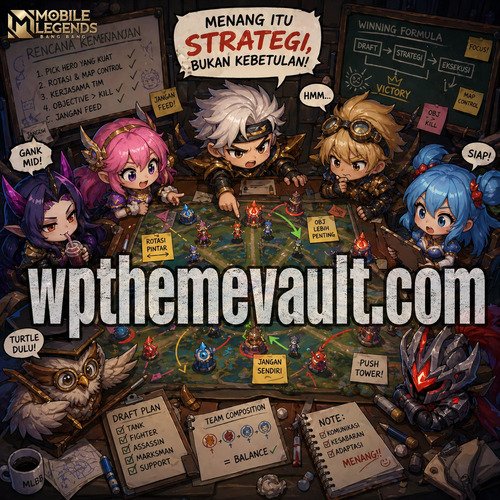
wpthemevault.com – The mobile gaming industry has changed dramatically over the past decade. What was once dominated by simple arcade-style applications is now filled with competitive multiplayer experiences that attract millions of dedicated players. One of the most influential games in this transformation is Mobile Legends: Bang Bang, developed by Moonton. It has become a defining title in mobile esports and remains one of the most widely played multiplayer games across many regions.
The game’s popularity comes from its ability to combine accessibility with strategic depth. A beginner can quickly understand how to move, attack, and use skills. However, consistent success requires far more than basic controls. Players must understand hero roles, objective timing, map awareness, and how team decisions shape the outcome of a match. This complexity is what makes the game endlessly engaging.
Many players spend a long time in the same rank because they focus too heavily on individual performance. While personal mechanics are important, the game rewards players who think beyond themselves. Understanding the bigger picture—such as how to create map pressure or when to sacrifice a fight for an objective—is often the key difference between average and advanced players.
Understanding the Core Systems of the Game
Every match in Mobile Legends: Bang Bang takes place on a symmetrical battlefield with three main lanes. These lanes connect the two opposing bases and are separated by jungle terrain. Each lane contains defensive towers that must be destroyed before the enemy base can be reached.
The lanes are not equal in strategic purpose. The Gold lane provides extra resources and is often assigned to heroes who scale with items, especially Marksmen. The EXP lane offers faster leveling, which benefits Fighters and heroes who rely on early skill upgrades. The Mid lane, because of its central position, is critical for controlling rotations and usually belongs to Mages.
The jungle is equally important. Neutral monsters provide gold, experience, and buffs. Heroes who control jungle resources effectively often gain an early advantage. Buffs can significantly improve certain heroes, especially those who rely on mana or sustained ability usage.
Major objectives such as the Turtle and Lord often decide the pace of the game. The Turtle appears in the early stages and grants economic rewards that can accelerate item progression. The Lord appears later and acts as a powerful ally capable of pushing lanes. Teams that consistently secure these objectives often gain map dominance and force the enemy into defensive play.
Hero Roles and Their Functions
The hero system is central to the game’s identity. Although every hero has unique abilities, they generally fall into six main roles.
Tanks are the protectors and initiators. Their role is to absorb damage, create openings, and protect fragile allies. Their presence often determines whether a team can engage safely.
Fighters are versatile heroes that combine damage and durability. They can dominate side lanes and often serve as secondary frontliners.
Assassins specialize in burst damage and mobility. Their primary objective is to eliminate high-priority targets quickly, then escape before being counterattacked.
Mages provide magical damage and often control the battlefield through area-based skills. They are particularly impactful during team fights and objective contests.
Marksmen are the primary late-game damage dealers. They depend heavily on farming and item progression. Once equipped, they can carry entire matches if positioned correctly.
Supports focus on enabling teammates. Their healing, shielding, or utility effects may not always appear dramatic, but they often decide the outcome of prolonged fights.
Match Phases and Changing Priorities
A match progresses through three phases: early, mid, and late game.
The early game is about establishing momentum. Players focus on farming, securing buffs, and controlling the first Turtle. Mistakes here can create a snowball effect that impacts the rest of the match.
The mid game is characterized by increased movement. Players rotate between lanes, contest objectives, and start grouping for team fights. Map control becomes the primary concern.
The late game is highly unforgiving. Death timers are long, and one failed team fight can result in losing the base. At this stage, patience becomes essential.
Building Strong Individual Skills
Many players struggle because they constantly change heroes. While experimenting can be fun, consistent improvement comes from specialization.
Mastering a small pool of heroes allows players to understand detailed mechanics such as skill combos, cooldown management, and ideal item progression. Familiarity creates confidence in difficult situations.
It is best to choose heroes that match personal preferences. Aggressive players often enjoy Assassins and Fighters. Strategic players may prefer Mages or Supports. Defensive players usually perform well with Tanks.
At the same time, flexibility is important. Knowing at least one hero from multiple roles makes it easier to adapt during draft selection.
Farming and Resource Management
Gold is one of the hidden foundations of success. Players who manage resources well often outperform mechanically stronger opponents.
Efficient farming means clearing waves consistently, taking jungle camps when available, and participating in objective kills. Strong players rarely waste time wandering without purpose.
Minion waves should always be respected. Ignoring them can lead to lost towers and reduced gold income. Even while preparing for fights, lane pressure must be considered.
Item builds should be adjusted according to the enemy team. Defensive items can counter burst damage, while penetration items help against durable opponents. Adaptive builds are often more effective than preset recommendations.
Positioning and Combat Discipline
Positioning is often what determines whether a player survives long enough to contribute.
Frontline heroes should engage first and control space. Backline heroes must stay safe and attack from a distance. Entering the wrong position can result in immediate elimination.
Map awareness is closely tied to positioning. The minimap provides constant information about enemy movement. Players who check it regularly can avoid ambushes and rotate effectively.
A common mistake is overchasing. Pursuing a low-health enemy too far often results in walking into a trap. Discipline means knowing when to stop and return to objectives.
Rotations and Map Pressure
Rotations define high-level gameplay. After clearing a lane, players should move to another area to create opportunities.
A Mage may rotate from mid to assist the Gold lane. A Fighter may push a side lane and then join a Lord contest. These movements create temporary advantages that can snowball into objectives.
Map pressure means forcing the enemy to respond. Split pushing is one example. While one hero pressures a side lane, the rest of the team controls a central objective. This divides enemy attention.
Communication and Team Coordination
Even in solo queue, communication is essential. Pings can warn teammates, signal objectives, and request assistance.
Understanding teammate intentions is equally important. If the jungler prepares to contest Turtle, nearby allies should move to support.
Mental resilience also matters. Many matches are recoverable even after early setbacks. Players who stay calm usually make better strategic decisions.
Common Mistakes That Slow Progress
Several habits consistently prevent players from improving.
Overextending is one of the most common. Chasing kills deep into enemy territory often results in being trapped.
Ignoring objectives is another. Winning fights means little if towers and Lord are not secured afterward.
Poor map awareness leads to unnecessary deaths. Missing enemies often indicate an incoming ambush.
Refusing to self-reflect is perhaps the most damaging habit. Players who analyze their own mistakes improve far faster than those who only blame teammates.
Conclusion Mastering Gameplay in Mobile Legends: Bang Bang: A Deep Guide to Strategy, Teamwork, and Progression
Mobile Legends: Bang Bang is much more than a fast-paced mobile game. It is a competitive strategy experience that rewards teamwork, awareness, and disciplined decision-making.
Players who want to improve should focus first on fundamentals: mastering a few heroes, farming efficiently, and prioritizing objectives over unnecessary fights. Once these habits become natural, advanced concepts such as rotations, split pushing, and team synergy become easier to apply.
The strongest players are not simply those with the highest kill counts. They are the ones who understand the larger flow of the match, support their team’s objectives, and make decisions that create long-term advantages.
In the end, success in Mobile Legends comes from seeing every match as a strategic challenge. The more a player understands that bigger picture, the more rewarding and enjoyable the game becomes.