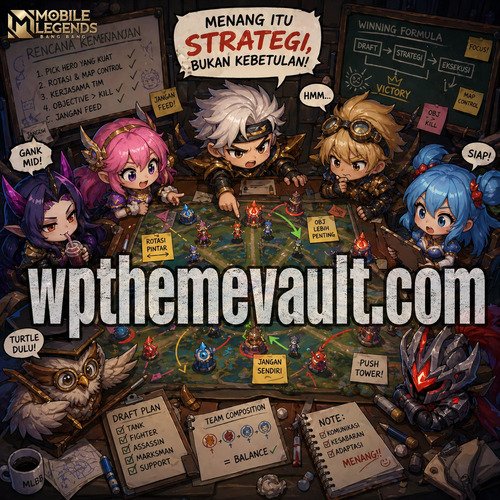
wpthemevault.com – Mobile Legends: Bang Bang has become one of the most beloved mobile MOBA games because it offers far more than fast-paced action and exciting team fights. One of the biggest reasons behind its continued popularity is the incredible variety of heroes available to players. Every hero brings a unique set of abilities and characteristics that influence how matches unfold, allowing players to develop different approaches and strategies depending on their preferences and team compositions.
Unlike many competitive games that rely heavily on individual mechanics, Mobile Legends rewards players who understand the strengths and limitations of their heroes. A player who possesses average reflexes but exceptional game awareness can often outperform someone with superior mechanics but poor decision-making. This balance between skill and strategy is what makes the game so engaging and ensures that players always have opportunities to improve.
Heroes are not simply tools for defeating opponents. They represent different philosophies of gameplay. Some encourage patience and positioning, while others reward aggressive movement and quick reactions. Learning how to maximize these strengths and minimize weaknesses is an essential part of becoming a better player and enjoying everything Mobile Legends has to offer.
Understanding Hero Roles and Their Responsibilities
Every hero role in Mobile Legends contributes to the success of a team in different ways. A balanced composition allows teams to respond to various situations and maintain control throughout the match.
Fighter heroes are among the most versatile characters in the game. Heroes like Yu Zhong and Aulus are capable of dealing considerable damage while maintaining enough durability to survive prolonged engagements.
One of the biggest advantages of fighters is their flexibility. They are equally comfortable initiating battles, protecting allies, and applying pressure on side lanes. This adaptability makes them valuable assets during every phase of the match.
Fighter players must carefully evaluate situations before committing to engagements. Entering a fight without considering enemy positions can quickly turn a favorable situation into a disaster. Patience and awareness are therefore essential qualities for anyone who wishes to master this role.
Another strength of fighters lies in their ability to create pressure through split pushing. Their combination of damage and survivability forces opponents to respond, creating opportunities for teammates to secure objectives elsewhere on the map.
Assassin Heroes and Their Ability to Create Chaos
Assassin heroes thrive on mobility and explosive damage. Characters such as Fanny and Gusion excel at eliminating vulnerable enemies before disappearing from danger.
Playing assassins effectively requires much more than mechanical skill. Map awareness and timing are equally important because engaging at the wrong moment can easily lead to failure. Successful assassin players are constantly observing enemy positions and searching for isolated targets.
Assassins also exert psychological pressure. Their ability to appear unexpectedly forces enemy marksmen and mages to remain cautious, limiting their effectiveness and restricting their movement during team fights.
Despite their impressive burst damage, assassins are not designed for extended battles. Knowing when to retreat is just as important as knowing when to attack.
Support Heroes and Their Underestimated Impact
Support heroes are often overlooked by inexperienced players, yet they play a crucial role in determining the outcome of matches. Heroes such as Faramis and Lolita provide healing, shields, crowd control, and utility that strengthen the entire team.
Unlike damage dealers, support heroes focus on enabling their teammates to perform at their best. A timely shield or crowd control ability can completely transform the outcome of a battle.
Support players must maintain exceptional awareness because they are responsible for monitoring multiple allies simultaneously. Their decisions often determine whether teammates survive dangerous situations or fall to enemy attacks.
Although their contributions may not always appear on the scoreboard, support heroes frequently become the hidden foundation upon which victories are built.
Adapting Hero Performance Across Different Match Stages
Every stage of the game presents unique challenges. Understanding how heroes evolve throughout a match allows players to maximize their strengths and avoid unnecessary mistakes.
The opening minutes are focused on establishing a strong foundation. Efficient farming and resource management provide the gold and experience necessary for heroes to reach their power spikes.
Heroes with strong early-game capabilities often attempt to pressure opponents immediately. Meanwhile, heroes that excel during the late game prioritize safety and gradual development. Recognizing these differences helps players avoid unfavorable engagements and maintain consistency.
Map awareness is another critical aspect of the early game. Monitoring enemy movements allows teams to react to rotations and avoid ambushes. Small advantages accumulated during this phase frequently become major leads later on.
Patience during the early game often produces greater rewards than reckless aggression.
Mid-Game Objectives and Rotational Play
Once towers begin to fall, the focus shifts toward objectives and map control. Teams rotate more frequently in order to secure Turtle, invade enemy territory, and apply pressure to multiple lanes.
Heroes with strong mobility and crowd control become particularly valuable during this stage because they can quickly support allies and influence various parts of the battlefield.
Objective control provides benefits that extend far beyond kill counts. Destroying towers and securing buffs limit enemy options while creating opportunities for future advantages.
Teams that prioritize objectives rather than personal statistics generally enter the late game with stronger positions and better chances of success.
Late-Game Team Fights and Decision-Making
The late game is where every decision carries tremendous weight. Heroes have acquired most of their items, and even a single mistake can determine the outcome of the match.
Positioning becomes more important than ever. Marksmen and mages must remain protected while dealing damage, while tanks and fighters focus on disrupting enemy formations and defending vulnerable allies.
Target selection also becomes increasingly significant. Eliminating enemy carries usually provides greater value than attacking durable frontliners. Teams that coordinate effectively and focus on priority targets often gain the upper hand during major engagements.
Patience and discipline are essential during this stage. Rushing into unfavorable situations frequently results in defeat, whereas teams that wait for the right opportunity are more likely to secure victory.
Improving in Mobile Legends requires continuous learning and adaptability. Players who embrace these principles are more likely to achieve consistent success.
Understanding Hero Matchups and Synergies
Every hero performs differently depending on the allies and opponents present in a match. Understanding these interactions helps players make smarter decisions and avoid unnecessary risks.
Certain heroes complement one another exceptionally well, creating combinations that amplify their strengths. Recognizing these synergies allows teams to execute strategies more effectively.
Knowledge of enemy capabilities also improves survival and helps players anticipate dangerous situations before they occur.
Flexible Itemization and Strategic Thinking
Recommended item builds are useful guidelines, but they should never replace critical thinking. Different enemy compositions require different solutions, and experienced players adapt accordingly.
Defensive equipment becomes increasingly valuable against burst-heavy teams, while offensive choices are preferable when holding a lead. Flexibility ensures that heroes remain effective regardless of changing circumstances.
Strategic itemization often separates experienced competitors from less adaptable players.
Maintaining a Positive Mindset and Strong Communication
Mental resilience is one of the most underrated aspects of competitive gaming. Players who remain calm during difficult situations are more likely to make intelligent decisions and avoid unnecessary mistakes.
Communication also plays a major role in success. Sharing information and coordinating movements allow heroes to function as part of a unified strategy rather than isolated individuals.
Even the strongest heroes struggle without teamwork, while coordinated teams can overcome significant disadvantages through cooperation and trust.
Consistency ultimately comes from discipline, patience, and the willingness to learn from every match.
Conclusion A Complete Look at Popular Heroes in Mobile Legends and the Strategies Behind Their Success
Heroes are the foundation of everything that makes Mobile Legends exciting and strategically rewarding. From versatile fighters and deadly assassins to supportive utility specialists, every role contributes to the complexity and depth that define the game.
Understanding hero strengths, adapting to different phases of the match, and continuously refining decision-making are essential for achieving long-term success. True mastery extends beyond flashy mechanics and impressive statistics. It requires awareness, communication, and the ability to adapt to changing circumstances.
As Mobile Legends continues to evolve with new heroes and shifting metas, players who remain committed to learning will always find opportunities to improve. The journey toward hero mastery never truly ends, and it is this endless pursuit of growth that makes every battle both memorable and rewarding.