Understanding Which Decisions Matter Most
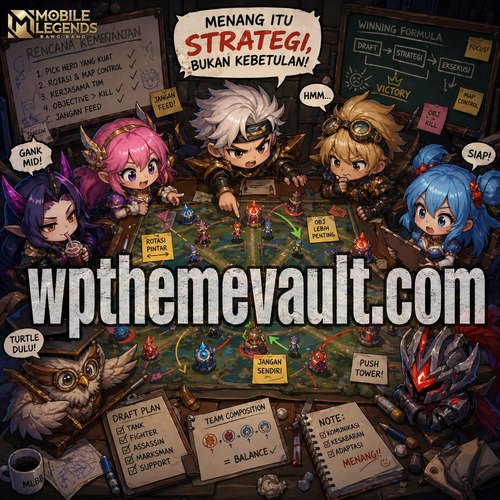
wpthemevault.com – In Mobile Legends: Bang Bang, players frequently face situations in which several actions appear useful at the same time. A teammate may request assistance in the mid lane, an enemy may be attacking a side-lane turret, a jungle camp may be available, and a major objective may soon become contested. Although every opportunity can offer some benefit, attempting to respond to all of them is rarely possible. Players must determine which action deserves immediate attention and which opportunity can be postponed without creating a greater disadvantage. Strategic priority management provides a framework for making these decisions by comparing urgency, potential rewards, risks, and the resources required to complete each action.
The first consideration is the consequence of ignoring a situation. An approaching enemy wave threatening an important turret may demand more attention than a minor skirmish that has little chance of changing the map. Similarly, protecting a teammate who can realistically survive with assistance may be worthwhile, while attempting to rescue an ally who is already surrounded by several enemies can expose additional players to danger. The decision should not be based solely on which event appears most dramatic. Instead, players should consider what is likely to happen if they act immediately and what consequences may follow if they choose another task.
The value of an opportunity also depends on its duration. Some openings disappear quickly, such as an isolated enemy moving through an exposed area or a brief chance to contest an objective before opponents arrive. Other opportunities remain available for longer, including collecting a safe jungle camp or clearing a wave that is not immediately threatening a structure. Players should recognize which actions are time-sensitive and which can wait. This prevents them from sacrificing a valuable opportunity simply because a less urgent task is easier to understand.
Resources and positioning further influence the decision. A player with low health and unavailable abilities may be unable to contribute effectively to a fight, even if the engagement is strategically important. A teammate who is already nearby may be able to respond more efficiently. Likewise, a hero positioned far from an objective may spend too much time traveling to arrive before the critical moment. Good prioritization accounts for what the player can realistically accomplish, not merely what would be desirable in an ideal situation.
Finally, players should evaluate the value of an action in relation to the team’s overall condition. Securing a small advantage may be useful when the team is already controlling the map, but preventing a major loss may become more important when the team is defending its base. The same action can therefore have different strategic value depending on the stage of the match. By consistently comparing urgency, impact, feasibility, and opportunity cost, players can make decisions that support the team’s broader objectives instead of reacting impulsively to every event.
Distinguishing Immediate Threats From Long-Term Opportunities
Not every important decision requires an immediate response. Some situations threaten to create a serious disadvantage within seconds, while others offer benefits that become valuable only after several actions. Understanding this difference helps players avoid sacrificing long-term progress whenever a minor disturbance occurs. An enemy approaching a vulnerable structure may require immediate attention, whereas a possible future fight may only require preparation and observation. Effective players recognize when speed matters and when patience produces a better result.
Immediate threats usually involve a clear and near-term consequence. An enemy team moving toward a poorly defended turret, an approaching dive against a low-health teammate, or an imminent objective contest can demand a rapid response. Delaying too long may remove the opportunity to defend effectively. However, urgency alone does not guarantee that intervention is correct. Players must still consider whether they can arrive in time, whether nearby allies can assist, and whether responding would expose an even more valuable part of the map.
Long-term opportunities require a different kind of planning. Creating pressure across multiple lanes, preparing vision around an objective, and improving the position of a minion wave may not produce an immediate reward, but these actions can make later engagements more favorable. A team that consistently prepares its waves before grouping may force opponents to divide their attention. A team that maintains safe access to the river may have more options when the next objective becomes available. These benefits emerge through preparation rather than one dramatic action.
The challenge is deciding when an immediate threat should interrupt a longer plan. Suppose a player is clearing a wave before moving toward the Lord, but an enemy begins attacking a nearby turret. The player should evaluate the turret’s importance, the likelihood of defending it successfully, and the amount of time remaining before the objective becomes relevant. If the structure can be defended without compromising the objective, changing direction may be sensible. If the defense is unlikely to succeed and the objective offers greater strategic value, preserving the original plan may be the better choice.
Players should also avoid allowing small distractions to repeatedly interrupt productive actions. An enemy appearing briefly in the distance does not always justify abandoning a safe wave or changing direction. Similarly, a teammate’s request for assistance should be evaluated in context rather than followed automatically. Prioritization is not a refusal to help others; it is a way to ensure that assistance produces a meaningful result. By separating genuine emergencies from lower-impact events, players can maintain strategic consistency while remaining responsive to important changes.
Managing Opportunity Costs Without Becoming Passive
Every action in Mobile Legends carries an opportunity cost. Moving toward one lane means spending less time in another, using an ultimate ability now means it may be unavailable later, and pursuing an enemy may delay an objective or allow a wave to reach a turret. Players who ignore these costs can achieve small successes while unintentionally losing larger advantages elsewhere. Understanding opportunity cost helps them evaluate whether a decision is worth the resources and time it consumes.
Consider a player who leaves a safe lane to pursue an opponent with very low health. The chase may result in an elimination, but it could also require several abilities, expose the player to an ambush, and sacrifice a large wave. If the opponent escapes, the team receives little benefit despite spending valuable time. A more disciplined player considers whether the target can realistically be eliminated, whether teammates can assist, and what the player will lose by continuing the pursuit. Sometimes the chase is worthwhile, but the decision should reflect its full cost rather than the attraction of a possible kill.
Ability usage creates similar trade-offs. A powerful ultimate may secure an elimination during a minor skirmish, yet the team could need that ability for a more important fight shortly afterward. Saving every major ability is not the solution, because unused resources provide no immediate value. Instead, players should compare the benefit of using an ability now with the likely value of retaining it. If the action creates an important objective advantage or prevents a dangerous loss, spending the resource may be justified.
Opportunity costs also affect defensive decisions. A tank who remains beside one teammate for an extended period may provide valuable protection, but the same commitment could leave another lane without assistance. A fighter who constantly groups with the team may contribute to fights while missing opportunities to create side-lane pressure. These responsibilities cannot always be fulfilled simultaneously, so players should evaluate which role has the greatest value in the current situation. The answer may change when an objective appears or the enemy begins a coordinated attack.
Good prioritization should not make players hesitant to act. Waiting indefinitely for perfect information can be just as harmful as acting without consideration. The goal is to make a reasonable decision using the available evidence, then reassess when circumstances change. Players should be willing to commit when the expected reward is meaningful and the risks are manageable. By understanding opportunity costs without becoming overly cautious, they can remain proactive while avoiding actions that consume resources without advancing the team’s position.
Choosing the Right Actions During the Early Game
The early game establishes the economic and positional conditions that influence later engagements. Players must decide how to balance farming, trading, rotating, supporting teammates, and contesting early objectives. Because resources are limited, unnecessary movement can delay important equipment purchases or allow an opponent to gain control of a lane. Strong early-game prioritization focuses on building a stable foundation while recognizing opportunities that are valuable enough to justify leaving the current task.
Lane management should generally provide a starting point for these decisions. Players need to collect available gold and experience without exposing themselves to unnecessary danger. However, farming should not become an inflexible priority when a clear opportunity appears nearby. If an opponent overextends and a teammate can provide reliable assistance, a short rotation may create an advantage. If the enemy remains protected and the route is dangerous, maintaining lane progress may be more valuable than attempting an uncertain attack.
Early objectives require preparation rather than automatic commitment. Players should consider whether their team has enough health, abilities, and nearby support to contest the Turtle effectively. If several allies are occupied in distant lanes, forcing an objective fight may produce a disadvantage despite the potential reward. In another situation, clearing a wave and moving together may create a favorable contest. The objective’s value must be considered alongside the team’s ability to secure it without losing more important resources.
Jungle decisions also involve prioritization. A jungler may need to choose between clearing an available camp, assisting a pressured lane, and moving toward an objective. These actions affect both immediate combat strength and future timing. Leaving the jungle too frequently for unsuccessful ganks can delay important levels and equipment, while farming continuously may allow teammates to lose control of the map. The best approach depends on the probability of success, the urgency of nearby threats, and whether the action supports the team’s next major objective.
Communication can make these early decisions more efficient. When teammates signal that an enemy is missing or that an objective is approaching, players can adjust their priorities before a crisis develops. A simple shared understanding of the next objective, the lane that needs protection, and the hero who requires assistance can reduce conflicting movements. By combining steady resource collection with selective rotations, players create a stronger foundation for the middle and late stages of the match.
Balancing Defense, Pressure, and Objectives in the Mid Game
The mid game introduces more complicated trade-offs because teams begin contesting multiple areas while structures become increasingly important. Players may need to defend a turret, maintain side-lane pressure, secure jungle resources, and prepare for the next major objective within a short period. Prioritization becomes essential because the team cannot commit every hero to every task. The most effective approach is to identify which event has the greatest consequence and assign responsibilities according to the positions and capabilities of available teammates.
Defensive decisions should account for both the value of a structure and the likelihood of saving it. A turret under pressure may deserve immediate assistance if nearby heroes can defend it successfully. However, sending several teammates into an unfavorable fight can create additional eliminations and leave the rest of the map exposed. Players should assess the wave, enemy numbers, available defensive abilities, and escape routes before committing. Sometimes a controlled retreat preserves more strategic value than attempting to protect a structure that is already difficult to save.
Pressure in other lanes can change the value of a defensive response. If opponents commit several heroes to one side of the map, teammates elsewhere may have an opportunity to damage a structure, clear resources, or prepare an objective. These actions should be evaluated according to what the enemy is likely to do next. A trade can be worthwhile when it produces a meaningful benefit without creating a larger vulnerability, but it becomes inefficient when the team sacrifices a valuable structure merely to secure minor damage elsewhere.
Objective preparation should influence the order of actions. Clearing relevant waves before the Lord becomes available can force opponents to spend time responding to lane pressure. Establishing safe access to nearby terrain may also make the eventual contest easier. If teammates spend too long pursuing an enemy who is unlikely to be eliminated, they may arrive late and lose the ability to challenge the objective. Players should therefore compare the immediate attraction of a skirmish with the strategic importance of arriving prepared.
The mid game also requires flexibility when an unexpected opportunity appears. An enemy caught alone may create a chance to gain a numerical advantage before an objective. A sudden threat to a vulnerable turret may require the team to delay its original plan. These changes should trigger a quick reassessment rather than a complete loss of direction. By maintaining a clear understanding of the team’s main priorities while remaining willing to adapt, players can coordinate defense, pressure, and objectives more effectively.
Making High-Impact Decisions During the Late Game
Late-game prioritization is especially important because the consequences of a mistake become much larger. A single elimination can create enough time for opponents to destroy a structure, secure the Lord, or launch a decisive push. Players must therefore evaluate actions according to their potential impact on the match rather than simply repeating habits that worked earlier. A low-value chase or an unnecessary solo push may be manageable in the early game but disastrous when one failed engagement can expose the base.
The first consideration is preserving the heroes who are essential to the team’s success. If a marksman provides most of the team’s sustained damage, protecting that hero may be more valuable than chasing a distant opponent. If the jungler is necessary to contest a major objective, entering an unnecessary fight that risks elimination can compromise the team’s ability to secure it. Players should recognize which teammates have responsibilities that cannot easily be replaced and adjust their movement to preserve those responsibilities.
Late-game wave management can also determine which opportunities deserve attention. A large enemy wave approaching a vulnerable structure may require immediate clearing, even when teammates would prefer to group for a possible fight. Conversely, a well-positioned allied wave can create pressure that allows the team to contest an objective without immediately committing to a direct engagement. Players should understand how waves affect the timing and safety of their next action, especially when opponents can quickly transition from an objective to a base push.
The decision to initiate a fight should reflect the team’s condition and the likely consequences of failure. If teammates are separated, key abilities are unavailable, or several enemies remain unseen, forcing a fight may expose the team to a decisive counterattack. Waiting for better positioning can be more valuable than attempting to create an immediate result. However, excessive hesitation can also surrender an opportunity to end the game. Players should commit when the available advantages are meaningful and the team can follow through together.
After a successful late-game engagement, prioritization remains essential. The team must decide whether it can finish the game, secure the Lord, damage a structure, or retreat safely. The correct choice depends on enemy respawn timers, remaining health, minion positions, and the team’s available damage. Pursuing every possible reward can waste the limited time created by the fight. By choosing the action with the greatest realistic impact, players can convert a temporary advantage into decisive progress while minimizing the risk of losing control.
Conclusion Strategic Priority Management in Mobile Legends: Choosing the Most Valuable Actions Under Pressure
Strategic priority management allows Mobile Legends players to make better decisions when several opportunities compete for attention. Rather than reacting automatically to every fight, teammate request, or visible target, players evaluate urgency, potential impact, available resources, and the consequences of ignoring a situation. This approach helps them distinguish between actions that deserve immediate commitment and tasks that can safely wait.
The most important lesson is that value depends on context. Defending a turret may be essential in one situation but inefficient in another. Pursuing an isolated opponent may create a meaningful advantage when teammates can follow up, yet become a costly distraction when the objective is more important. Farming, rotating, fighting, and retreating all have legitimate uses, but each action should support the team’s current needs rather than compete with them unnecessarily.
Opportunity cost is another important part of the process. Time spent traveling, abilities used during minor encounters, and heroes committed to distant fights all affect what the team can accomplish next. Players who understand these costs can preserve important resources without becoming passive. They learn to commit when the expected reward justifies the risk and to change direction when new information makes the original plan less valuable.
Priorities also evolve throughout the match. Early-game decisions emphasize stable resource collection and useful rotations, the mid game requires coordination between defense and map pressure, and the late game demands careful protection of decisive opportunities. Players should adjust their choices as structures fall, equipment improves, and the consequences of each engagement become more significant.
Ultimately, strong prioritization is not about finding one perfect rule for every situation. It is about consistently asking which available action will create the greatest useful impact, whether the team can realistically complete it, and what may be sacrificed in the process. By answering these questions with discipline and flexibility, players can reduce wasted movement, improve team coordination, and make more effective decisions from the opening minutes to the final battle in Mobile Legends.